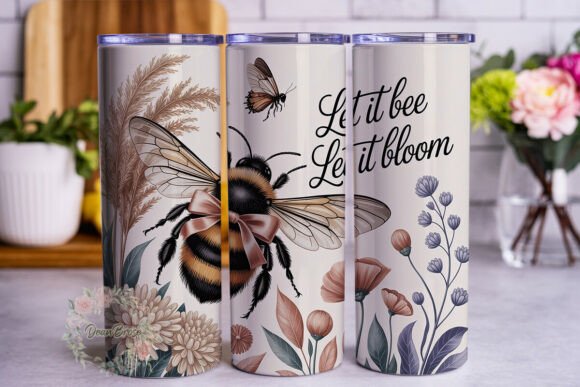
Bee and Bloom Floral 20oz Tumbler Wrap Review
As a designer who spends more time staring at stitch maps than most people care to admit, I approach every new digital embroidery file with a mix of curiosity and skepticism. We have all been there: you buy a design based on a glossy thumbnail, only to find out later that the satin stitches are too wide for the detail or the density turns your fabric into cardboard. So, when I recently evaluated the Bee and Bloom Floral 20oz Tumbler Wrap, I wasn't just looking at it as a sublimation graphic; I was analyzing it through the lens of an embroiderer looking for the next great machine embroidery design for my client queue.
The first thing that strikes you about this asset is its mood. It feels fresh, organic, and slightly whimsical without being childish. The layout features a harmonious balance between botanical elements and the central bee motif, creating a visual personality that screams "spring market" or "boutique gift." While the product description specifies this as a high-resolution PNG intended for Tumbler Wraps—specifically offering files for both straight and tapered 20oz tumblers—the composition translates beautifully to textile applications. The dimensions, listed at 9.3″ x 8.2″, provide a generous canvas. For an embroiderer, this scale suggests a design meant to be a statement piece rather than a subtle accent.
Translating Graphics to Stitch: A Real-World Scenario
Let's move beyond theory and talk about actual production. Imagine you run a small shop product line focused on eco-friendly goods. You have a batch of heavy canvas tote bags sitting on your worktable, and you need a handmade product that will stand out at an upcoming craft fair. This is where the Bee and Bloom Floral 20oz Tumbler Wrap shines as a reference or a base for adaptation.
Because the original file is a graphic, the immediate task is digitizing. However, the clarity of the source image makes this process significantly smoother. The distinct separation between the floral blooms and the bee allows for clear definition when planning your stitch density. In a real project scenario, I would envision this working exceptionally well as a large back-piece on a denim jacket or a centered sweatshirt embroidery design. The organic shapes of the flowers lend themselves perfectly to fill stitches, while the bee could be highlighted with a textured satin stitch or even a playful applique technique if you want to add dimension.
For an Etsy seller specializing in nursery decor, this design could easily become a pillow cover centerpiece. The soft, natural theme fits the current trend of woodland and garden-inspired baby rooms. If you were to adapt this for baby embroidery, you might simplify the finer details to ensure durability after repeated washing, but the core composition remains strong enough to hold its identity even with reduced complexity.
Technical Considerations for the Embroiderer
While the visual appeal is undeniable, practical execution requires a critical eye. Since the source material is provided as a PNG for sublimation, you do not automatically receive an embroidery file with defined stitch types like running stitch, satin stitch, or fill stitch. This is a crucial distinction. You cannot load this directly into your machine. Instead, you must use it as a high-quality underlay or tracing template within your digitizing software.
When converting this graphic, pay close attention to the thread colors. The original likely utilizes gradients to show depth in the petals. In embroidery, we rarely have the luxury of infinite color blending. You will need to make strategic decisions about color blocking. I recommend testing the design in black and white mockups first to ensure the contrast holds up without relying on shading. If the light and dark areas blend too much, your finished product will look muddy from a distance.
Fabric choice is another variable that demands caution. This design, with its potential for dense floral fills, performs best on stable, medium-to-heavy weight fabrics. If you attempt this on a thin, stretchy t-shirt without proper stabilization, you risk puckering and distortion. Always use a cut-away stabilizer for designs of this magnitude to maintain structural integrity. Furthermore, be wary of textured fabrics like thick towels or looped terrycloth; the fine details of the bee's wings or delicate flower petals might get lost in the fabric texture.
Commercial Viability and Brand Consistency
For those running a craft business, consistency is key to building buyer engagement and trust. The Bee and Bloom Floral 20oz Tumbler Wrap offers a cohesive aesthetic that can be replicated across various products. Imagine offering a matching set: a sublimated tumbler paired with an embroidered tote bag featuring the same motif. This cross-product branding elevates your perceived value and encourages larger basket sizes from customers.
However, before listing items for sale, you must verify the licensing terms. The product notes state that the download includes PNG files without watermarks, but it does not explicitly detail the commercial rights for derivative works like embroidered goods. Always confirm whether the license permits you to use the graphic as a basis for physical custom apparel or if it is restricted to digital printing only. Ignoring this step can lead to serious issues for commercial embroidery projects.
Additionally, consider the hoop size requirements. At over 9 inches in height, this design will likely require a large hoop or a re-digitized version split into sections if your machine has limitations. Trying to force a design of this scale into a standard 4x4 hoop will result in losing the intricate details that make the artwork special.
Final Verdict for Makers and Designers
The Bee and Bloom Floral 20oz Tumbler Wrap is a robust asset for creatives who understand how to bridge the gap between print and stitch. Its strength lies in its versatile composition and high-resolution clarity, which serves as an excellent foundation for creating unique personalized gifts and boutique merchandise. Whether you are creating an embroidered patch for a local apiary, designing holiday embroidery for kitchen towels, or crafting a standout tote bag design, this graphic provides the visual bones you need.
Just remember: treat this as a premium reference tool. Test your digitized version on scrap fabric first. Check your tension settings. Ensure your stitch density doesn't compromise the drape of the garment. When executed with care, this design has the potential to become a signature piece in your portfolio, driving recognition and professionalism for your brand. It is not just a picture of a bee and some flowers; it is an opportunity to create something tangible and beautiful that customers will cherish.