Coastal Lighthouse Sailing Ship Tumbler Review
As a designer who spends more time staring at stitch maps than most people care to admit, I approach every new digital embroidery file with a mix of excitement and skepticism. We have all been there: you buy a design based on a glossy thumbnail, only to find out later that the satin stitches are too wide for the detail or the density turns your fabric into cardboard. So, when I came across the Coastal Lighthouse Sailing Ship Tumbler, I didn't just look at the preview; I wanted to know how this graphic would translate into a tangible, stitched reality. While the product listing categorizes this under Tumbler Wraps and Graphics, my mind immediately went to how we can adapt this nautical theme for actual thread work on fabric.
The First Impression: Nautical Nostalgia Meets Modern Layout
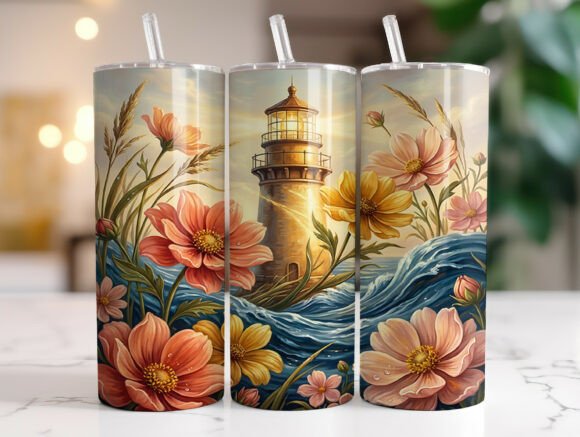
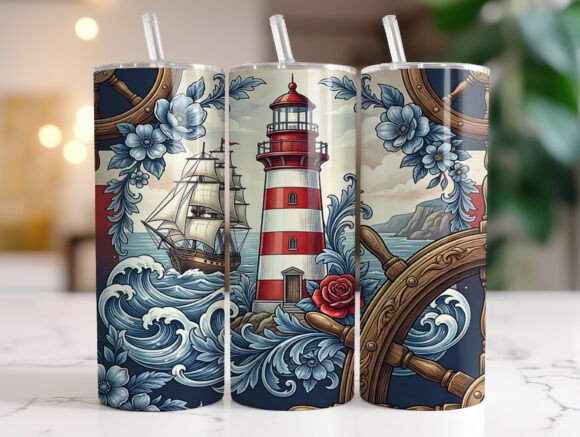
The first thing that strikes me about the Coastal Lighthouse Sailing Ship Tumbler design is its mood. It captures that classic coastal vibe without feeling cliché. The composition features a sturdy lighthouse standing guard over a sailing ship, likely battling gentle waves. For an embroidery project, this balance of vertical and horizontal elements is crucial. The lighthouse provides a strong anchor point, while the ship adds movement and narrative. In a machine embroidery design, this kind of layout requires careful planning regarding stitch direction. If I were digitizing this myself, I would ensure the water uses a flowing fill stitch to mimic motion, while the lighthouse tower might benefit from a tighter column fill or even a satin stitch border to define its structure against the background.
The visual personality here is versatile. It feels at home in a nursery, a beach house, or on a boutique apparel line. However, since the source file is a high-resolution PNG intended for sublimation or printing, us embroidery folks have to do a bit of mental translation. We aren't just printing ink; we are building texture. The 9.3″ x 8.2″ dimensions mentioned in the file details suggest a fairly large canvas. In the embroidery world, this is a significant footprint. It tells me this isn't a subtle chest logo; it's a statement piece meant for the back of a jacket, a large tote, or a decorative pillow.
Real-World Application: From Screen to Stitch
Let's talk about a real scenario. Imagine a customer comes to your small shop asking for a personalized gift for a father who loves sailing and lives near the coast. You need something that feels handmade but professional. This is where the Coastal Lighthouse Sailing Ship Tumbler concept shines as inspiration. Even though the original file is a graphic for a tumbler wrap, the imagery is perfect for a custom sweatshirt embroidery project. Picture this design stitched onto a navy blue heavyweight fleece. The contrast of bright white thread for the lighthouse beam and cream tones for the sails against the dark fabric would be stunning.
For an Etsy seller or creative entrepreneur, this theme opens up several product avenues. Beyond apparel, consider a heavy-duty canvas tote bag design. Beachgoers love durable bags, and a nautical scene fits the aesthetic perfectly. You could also scale the design down for an embroidered patch. Patches are incredibly popular right now, and a circular or oval version of this lighthouse and ship scene could be ironed onto denim jackets or hats. The key is recognizing that while the source is a graphic, the artistic elements are ripe for conversion into a finished product that holds value.
If you are working on baby embroidery, you might need to simplify the details. A onesie or a burp cloth doesn't need the full 9-inch width. In this case, focusing just on the sailing ship or isolating the lighthouse could create a sweet, thematic accent for a nursery blanket. The goal is to maintain the charm of the original art while respecting the limitations of the smaller hoop size and delicate fabric texture of baby items.
Technical Considerations for the Embroiderer
Here is where we need to be realistic and practical. Since the Coastal Lighthouse Sailing Ship Tumbler is sold as a PNG for tumbler wrapping, it is not a ready-to-stitch embroidery file like a PES or DST. This is a critical distinction. If you plan to use this image for embroidery, you will likely need to have it digitized or use software to convert the graphic into stitches. This gives you control, but it also introduces variables.
When adapting a detailed graphic like this, stitch density is your biggest friend and enemy. A lighthouse with intricate brickwork or a ship with complex rigging can easily become a mess of thread if the density is too high. On textured fabrics like towels or pique polo shirts, fine details often get lost. I always advise testing the design on scrap fabric first. Try a running stitch outline for the finer details of the ship's ropes rather than filling them, which can look clunky.
Color selection is another area requiring a keen eye. The original graphic likely has gradients and shadows. In thread, we work with solid spools. You will need to decide on your thread colors carefully. Do you want a realistic look with ten different shades of blue for the ocean, or a stylized, flat look with just two? For a commercial embroidery run, fewer color changes mean faster production and lower costs. For a one-off personalized gift, you can afford to be more artistic with shading.
Navigating Fabric and Hoop Challenges
Not every surface is ready for a design of this magnitude. If you are attempting to put this on a curved surface like a cap, the 9.3-inch width is simply too large. You would need to drastically resize it, which risks losing the definition of the sailing ship. Caps also have a seam running down the middle, which can distort circular or wide designs. Similarly, stretchy fabrics require a robust stabilizer. Without proper backing, a dense nautical scene will pucker, ruining the handmade product's presentation.
Dark fabrics present their own challenge. If the lighthouse beam is white, it will pop beautifully. But if the sky in the design is light blue, stitching that onto a black sweatshirt might look washed out unless you use a very opaque thread or adjust the design to have a transparent background. Always compare light and dark fabric backgrounds before committing to the final stitch-out. Testing in black and white mockups can also help you see if the contrast levels hold up without relying on color.
Building Brand Value and Customer Trust
Ultimately, using a design like the Coastal Lighthouse Sailing Ship Tumbler as a foundation for your embroidery projects is about elevating your brand. When a customer receives a custom apparel item with crisp, well-thought-out stitching, it builds trust. They see that you care about the details. Whether it's for holiday embroidery gifts, wedding favors, or boutique merchandise, the professionalism of the finished stitch reflects directly on your reputation as a maker.
For those selling design assets or printable mockups, understanding how a graphic translates to physical goods is a unique selling point. You can market your services by showing clients not just the digital image, but how it looks embroidered on a towel, a patch, or a jacket. This bridges the gap between digital files and physical reality, adding immense value to your craft business.
Before you start stitching or selling, always confirm the licensing terms. Just because a file is available for download doesn't automatically grant commercial rights for physical goods, especially if you are modifying the format from print to embroidery. Check the specific license included with the Coastal Lighthouse Sailing Ship Tumbler to ensure you are cleared to sell finished items. With the right preparation, attention to stitch density, and creative adaptation, this nautical theme can become a staple in your portfolio, proving that good design sails smoothly whether it's printed on a tumbler or stitched onto a sailboat captain's favorite jacket.