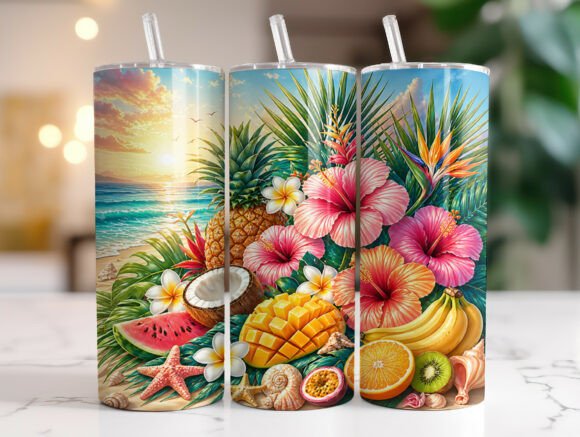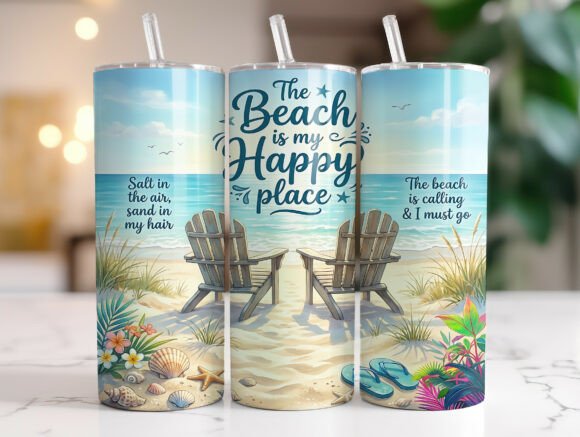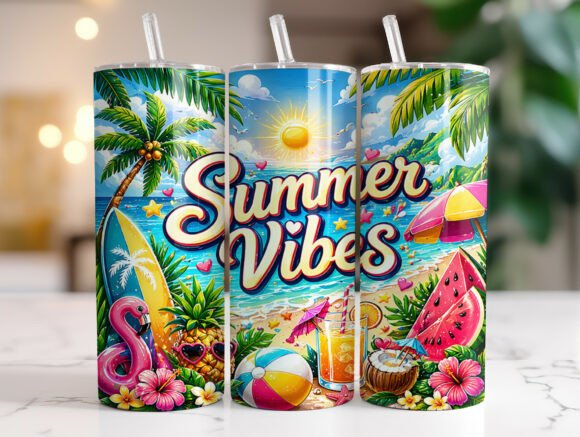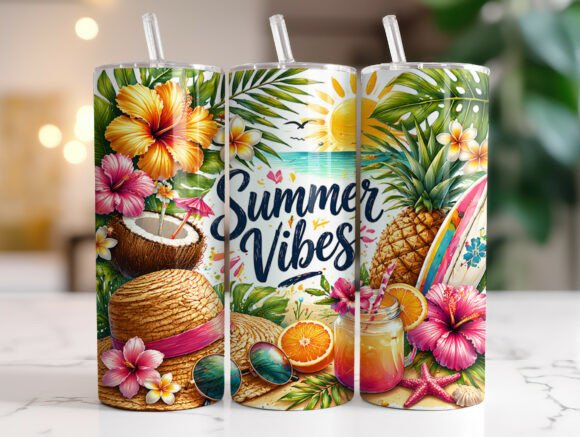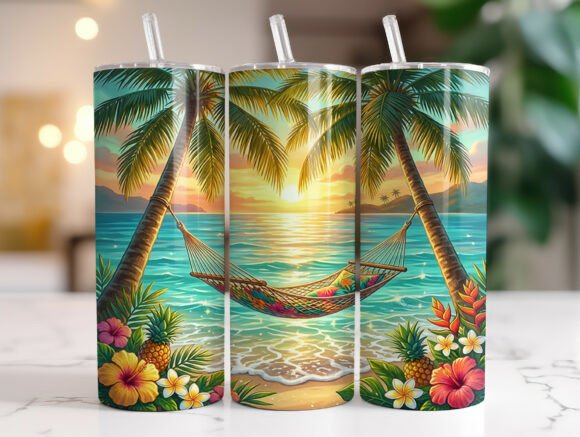
Tropical Beach Hammock 20oz Tumbler Wrap Review
As a designer who spends more time staring at stitch maps than most people spend watching television, I approach every new digital embroidery file with a mix of excitement and skepticism. We have all been there: you buy a design based on a flashy thumbnail, only to find out the stitch density is too high for your fabric or the details are lost in translation. Today, I am taking a close look at the Tropical Beach Hammock 20oz Tumbler Wrap. While the product listing categorizes this under Tumbler Wraps and Graphics, my job is to evaluate its potential beyond sublimation blanks and see how it holds up when translated into thread for real-world embroidery projects.
First Impressions: Mood and Layout
The moment I opened the files, the vibe was immediate. This isn't just a generic palm tree; it captures that specific, laid-back "island time" feeling that customers crave during the summer months. The layout features a relaxed hammock strung between tropical elements, creating a horizontal flow that is perfect for wide applications. For an Etsy seller or craft business owner, mood is everything. This design screams relaxation, making it an ideal candidate for vacation wear, resort merchandise, or end-of-school-year gifts.
Visually, the composition feels balanced. There is enough negative space to prevent the design from looking cluttered, which is crucial when you are working with fill stitch areas on textured materials. The theme suggests a playful yet sophisticated aesthetic, suitable for both adult custom apparel and fun baby embroidery on onesies. However, because this originates as a high-resolution PNG intended for printing, the transition to stitching requires a keen eye for detail.
Real-World Application: From Screen to Stitch
Let's talk about a concrete scenario. Imagine a local boutique owner preparing for a summer pop-up shop. They need a signature item that stands out on the rack. A standard t-shirt is fine, but an embroidered tote bag design featuring this tropical scene? That adds perceived value. If I were digitizing this Tropical Beach Hammock 20oz Tumbler Wrap concept for a heavy canvas tote, I would lean into bold satin stitch borders for the hammock ropes to give them definition against the coarse fabric texture.
Alternatively, consider the holiday embroidery market, specifically for winter escapes. Many clients order "snowbird" gear for their trips to Florida or Hawaii. This design fits perfectly on a polo shirt or a visor. The horizontal nature of the hammock works exceptionally well across the chest of a sweatshirt or along the brim of a cap, provided the curvature is accounted for in the digitizing phase. For a small shop product line, consistency is key. Using this motif across a range of items—from kitchen towels to embroidered patches—creates a cohesive brand identity that buyers recognize instantly.
Navigating Technical Challenges
Here is where we need to be realistic. Since the source material is a graphic intended for 20oz skinny tumblers, the original aspect ratio is tall and narrow (9.3″ x 8.2″). When adapting this for embroidery, you cannot simply shrink it down without consequences. If you attempt to stitch this on a thin fabric like a lightweight rayon tee without proper stabilization, the dense areas of the palm fronds could cause puckering.
You must also consider the hoop size. While the graphic is large, your machine hoop might not be. If you are aiming for a full-back design on a jacket, you will need a large hoop. For smaller applications, like a pocket logo on a sweatshirt embroidery project, you will need to simplify the design. Tiny details that look crisp in a 300 DPI PNG can turn into a muddy mess of thread if the running stitch elements are too fine. I always advise testing the design on scrap fabric first. Check how the thread colors contrast against your chosen material. A dark green palm leaf might disappear completely on a forest green hoodie unless you add a light underlay or outline.
Enhancing Product Value and Customer Trust
In the world of commercial embroidery, the finish of the finished product dictates your reputation. A well-executed version of this tropical design elevates a basic garment into a handmade product worth a premium price. Customers associate intricate, clean stitching with quality. If the edges are frayed or the coverage is sparse, trust erodes quickly.
By carefully selecting the right stabilizer and optimizing the stitch count, you ensure the design withstands frequent washing—a critical factor for personalized gift items like baby blankets or daily-use aprons. When a client receives a gift that maintains its vibrancy after multiple washes, they remember the maker. This leads to repeat business and positive reviews, which are the lifeblood of any creative entrepreneur.
Designer Notes for Success
Before you commit to producing a batch of these for your inventory, keep these practical tips in mind:
- Test on Scrap: Always run a test stitch-out on the exact fabric you plan to sell. What works on cotton twill might fail on polyester mesh.
- Check Contrast: View your mockups in black and white. If the design loses its shape in grayscale, your thread color choices need adjustment.
- Verify Licensing: Since this is sold as a graphic file, confirm the license terms before selling finished physical goods. Some digital assets are for personal use only, while others allow commercial application.
- Simplify for Small Hoops: If working on caps or small patches, reduce the complexity of the background elements to maintain clarity.
- Consider the Backing: For stretchy fabrics, a cut-away stabilizer is non-negotiable to prevent distortion over time.
The Tropical Beach Hammock 20oz Tumbler Wrap offers a fantastic foundation for summer-themed collections. While it starts as a graphic for Graphics and sublimation, its visual strength translates beautifully into thread when handled with professional care. Whether you are creating a printable mockup for your online store or stitching the final design assets onto a customer's favorite jacket, the potential is there. It is up to us, the makers, to bridge the gap between digital image and tactile art, ensuring every stitch adds value to the final piece.