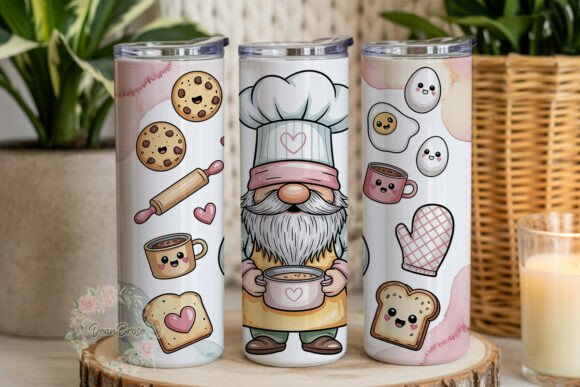
Little Chef Gnome Baking 20oz Tumbler Design Review
As a designer who spends more time staring at stitch maps than most people care to admit, I approach every new machine embroidery design with a mix of curiosity and skepticism. We have all been there: you buy a cute graphic, digitize it (or download a pre-made file), and halfway through the run, you realize the density is too high for the fabric or the details are going to vanish into a puckered mess. That is why I took a close look at the Little Chef Gnome Baking 20oz Tumbler concept before committing it to a real-world project. While the source material is marketed as a high-resolution PNG for tumbler wraps, translating this aesthetic into thread requires a different kind of eye.
First Impressions and Visual Personality
The immediate appeal of this design lies in its mood. There is something undeniably cozy about a baking theme, especially when paired with the whimsical charm of a gnome. The layout suggests a character deeply engaged in culinary creativity, which instantly creates a narrative for the viewer. For those of us creating handmade products, storytelling is half the battle. A customer doesn't just buy an apron; they buy the idea of warm cookies and holiday mornings.
Visually, the composition feels balanced for a vertical or square application. The dimensions provided (9.3″ x 8.2″) indicate a substantial graphic, which is excellent for large-format applications but demands careful consideration when scaling down for embroidery. The "Chef" aspect implies specific details like a hat, perhaps a rolling pin, or mixing bowls. In thread, these elements need clear separation. If the original Graphics rely on subtle color gradients, we must ensure our thread colors provide enough contrast to maintain that definition without turning the design into a muddy blob of satin and fill stitches.
Real-World Application Scenarios
Let's move beyond the screen and talk about where this actually lives. I recently had a client request a series of matching items for a family baking competition gift set. This is exactly where the Little Chef Gnome Baking 20oz Tumbler aesthetic shines. Imagine this design stitched onto a heavy-weight canvas tote bag design meant for carrying flour and sugar. The rustic, handmade vibe of embroidery complements the baking theme perfectly.
Another strong contender is sweatshirt embroidery. A crewneck sweatshirt in oatmeal or sage green provides a neutral backdrop that allows the gnome's colors to pop. Because the original asset is high resolution (300 DPI), it serves as an excellent reference for digitizing a clean embroidery file. However, one must be cautious. Just because it works on a 20oz tumbler wrap doesn't mean it automatically translates to a curved cap or a stretchy baby onesie. For baby embroidery, you would need to simplify the stitch count significantly to ensure comfort against sensitive skin, perhaps opting for a simpler outline or reducing the density of the background elements.
For Etsy sellers and small shop owners, versatility is key. This design could easily anchor a collection that includes kitchen towels, pot holders, and even embroidered patches. An embroidered patch featuring this chef gnome could be sold as an add-on item, allowing customers to customize their own jackets or bags later. This expands the utility of the single design asset into multiple revenue streams.
Technical Considerations for Stitching
Here is where the rubber meets the road. When adapting a print-ready image into a digital embroidery file, several technical hurdles appear. First, consider the stitch density. Print graphics can handle infinite detail; embroidery cannot. If the gnome's beard or the steam rising from a bowl is rendered with too many fill stitch layers, the fabric will become stiff and prone to tearing. I recommend reviewing the digitized version specifically for underlay settings and pull compensation.
Hoop size is another critical factor. Given the original aspect ratio, this design likely requires a large hoop, such as a 5x7 or even a 6x10, to capture the full scene without excessive scaling. If you attempt to shrink this into a 4x4 hoop for a pocket logo, you risk losing the finer details, such as the gnome's facial expression or the texture of the baking tools. Tiny lettering, if included in the design, should be tested rigorously. Small text often becomes illegible if the font size drops below 0.25 inches, depending on the thread weight used.
Fabric choice matters immensely. On textured fabrics like waffle weave tea towels or looped terrycloth, fine details can get lost. For these materials, I suggest using a heavier stabilizer—perhaps a cut-away rather than tear-away—to provide a solid foundation. Conversely, on stretchy fabrics like jersey knits for t-shirts, the design needs to be digitized with flexibility in mind to prevent distortion after the first wash. Always test the design on scrap fabric that matches your final product. Do not skip this step; seeing how the satin stitch edges behave on your specific material is the only way to guarantee quality.
Enhancing Product Value and Brand Trust
In the world of commercial embroidery, the finished look dictates the price point. A crisp, well-executed version of the Little Chef Gnome Baking 20oz Tumbler motif elevates a simple garment into a boutique item. Customers associate high-quality stitching with professionalism. If the threads are shiny where they should be matte, or if the registration is off, it undermines the perceived value of the custom apparel.
Consistency is also vital for brand recognition. If you are building a line of kitchen-themed goods, ensuring that this gnome looks consistent across different products—from aprons to pillow covers—builds trust. It tells the buyer that you pay attention to detail. Furthermore, for holiday embroidery projects, this design offers a timeless appeal that isn't strictly tied to one specific date, allowing you to sell the inventory over a longer season.
Practical Designer Notes for Success
Before launching this into production, keep these practical steps in mind:
- Test on Scrap: Always run a sample on the exact fabric you plan to use. Check for puckering and thread breaks.
- Check Contrast: View your digitized preview in black and white. If the details disappear in grayscale, your thread color contrast is insufficient.
- Verify Licensing: The original product description notes the inclusion of PNG files for tumbler wraps. Ensure you have the appropriate license to convert these graphics into embroidery files for commercial sale. Many graphic licenses do not automatically cover physical resale of embroidered goods.
- Stabilizer Selection: Match your stabilizer to the fabric weight. Heavy designs on light fabric require robust support.
- Mockup Testing: Create printable mockups to visualize the design on different garment colors before stitching a single thread.
Ultimately, the Little Chef Gnome Baking 20oz Tumbler offers a delightful starting point for creative entrepreneurs. With careful digitizing and thoughtful application, it can transform standard blanks into cherished personalized gifts and best-selling small shop products. The key lies in respecting the limitations of the medium while leveraging the charm of the original art.