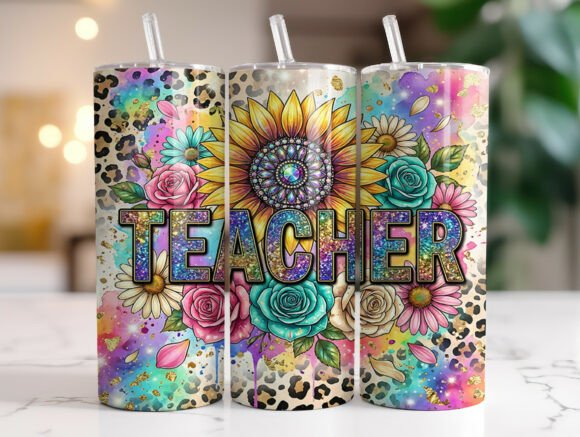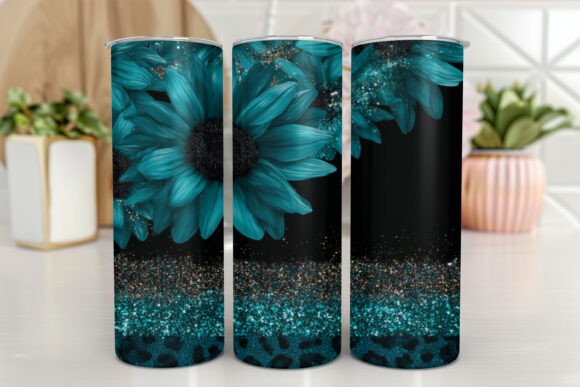
Sunflower Glitter Tumbler Sublimation: A Designer's Review
As a designer who spends most of my day staring at screens and threading needles, I approach every new digital embroidery file with a mix of curiosity and skepticism. When I first pulled up the Sunflower Glitter Tumbler Sublimation graphic, my initial reaction wasn't to think about tumblers. Instead, my brain immediately started translating those high-resolution pixels into thread paths. While this asset is categorized under Tumbler Wraps and marketed for sublimation, the bold, cheerful energy of the sunflower motif begs the question: how would this translate into a tangible, stitched handmade product?
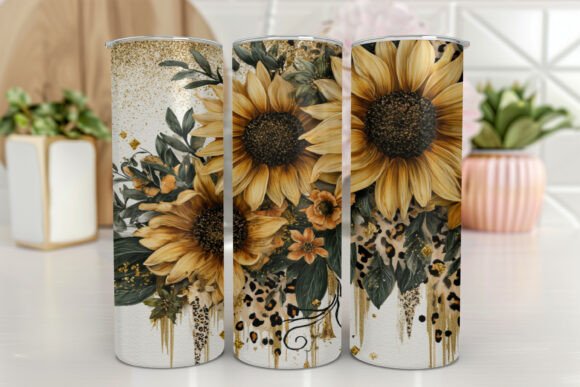
The design itself radiates a specific mood. It is not subtle; it is vibrant, warm, and unapologetically bright. The "glitter" effect mentioned in the title suggests a textured, sparkling aesthetic in print, but for us embroidery professionals, this translates to a challenge in stitch density and thread selection. The layout is substantial, sized originally for a 20oz straight skinny tumbler at 9.3″ x 8.2″. That is a large canvas. In the world of machine embroidery, a design of this scale commands attention, making it ideal for statement pieces rather than delicate accents.
Translating Digital Graphics to Stitched Reality
Let's walk through a real-life scenario. Imagine a client comes to your small shop requesting a custom tote bag for a summer farmers' market series. They want something that screams "sunshine" and local growth. You pull up the Sunflower Glitter Tumbler Sublimation file. Even though it is a graphic intended for printing, the strong outlines and distinct color blocks make it a perfect candidate for adaptation into an applique design or a dense fill stitch project.
If you were to stitch this directly as a standard machine embroidery design, the visual personality would rely heavily on your thread choices. To mimic the "glitter" aspect without actual metallic sublimation ink, you would need to strategize your thread colors. Using variegated golds and yellows could create that shimmering depth. However, one must be cautious. The original graphic likely relies on digital noise and gradient overlays to achieve its sparkle. In embroidery, trying to replicate this with only satin stitch or fill stitch can lead to excessive thread breaks if the density is too high. A smarter approach for a finished product like this might be to use the graphic as a template for cut-work applique, using a shimmer fabric for the petals and a solid, dark brown for the center.
Practical Applications Beyond the Tumbler
While the source files are packaged for Graphics and sublimation, the utility of this imagery extends far beyond drinkware. For an Etsy seller looking to diversify their inventory, this sunflower motif is a goldmine for seasonal collections. Consider a heavy-weight cotton sweatshirt. A large-scale sunflower placed on the back yoke creates an instant boutique feel. Because the original dimensions are nearly ten inches tall, it fits perfectly on adult apparel without needing significant resizing, which preserves the integrity of the details.
For baby embroidery projects, such as a nursery pillow cover or a blanket border, the design might need to be scaled down. This is where a designer's eye for detail becomes critical. When shrinking a complex graphic like this, the tiny elements that create the "glitter" illusion in print might vanish or become a tangled mess of threads. If you are adapting this for smaller items like baby caps or bibs, you would likely need to simplify the internal details, perhaps converting the textured centers into a simple, clean running stitch outline or a solid fill to maintain clarity.
Holiday gifts are another strong avenue. A kitchen towel set featuring these sunflowers feels appropriate for late summer or early autumn gifting. The warmth of the yellow contrasts beautifully against natural linen or crisp white cotton. However, when working on textured fabrics like waffle weave towels, the stability of the design is paramount. The large surface area of the original design means there is a lot of thread pulling on the fabric. Without the right stabilizer, you risk puckering that ruins the professional look of the custom apparel or home good.
Technical Considerations for the Serious Maker
Before committing this design to a client's expensive garment, there are several technical hurdles to clear. First, we must address the hoop size. The original graphic is 9.3″ x 8.2″. Not every home embroidery machine has a hoop large enough to handle this in one go. If your machine maxes out at a 5x7 or 6x10 hoop, you will need to split the design. Splitting a design with organic, flowing shapes like sunflower petals is tricky; alignment errors can leave visible seams that detract from the brand consistency and quality of your work.
Furthermore, consider the fabric texture. This design shines on smooth, tightly woven fabrics like twill, denim, or high-quality cotton. If you attempt to stitch this on a stretchy knit or a fuzzy fleece without proper stabilization, the definition of the petals will get lost. The "glitter" effect, which relies on sharp contrast and precise edges in the digital file, will blur if the fabric shifts during stitching. For dark fabrics, the yellow threads will pop magnificently, but ensure your underlay stitches are sufficient to prevent the dark background from showing through the lighter thread colors.
It is also vital to remember that the Sunflower Glitter Tumbler Sublimation listing specifies it is for digital files only, packaged in a .zip archive with high-resolution 300 DPI images. It does not explicitly state it includes native embroidery formats like .PES, .DST, or .EXP. As a professional, you cannot simply load a PNG or JPG into your embroidery machine. You would need to use digitizing software to convert this graphic into a stitch file, or hire a digitizer to do it properly. This step is crucial for controlling stitch density and ensuring the machine doesn't chew up the thread trying to replicate digital gradients.
Building Trust and Value Through Quality
Ultimately, the decision to use a design like this in your craft business comes down to the value it adds to your brand. Customers trust handmade items because they expect a level of care that mass production cannot match. If you adapt this sunflower graphic into an embroidered patch or a custom tote, the finish must be flawless. Loose threads, poor tension, or misaligned sections will immediately signal low quality, regardless of how beautiful the original artwork is.
For those creating printable mockups to sell as design assets, this graphic offers excellent versatility. You can showcase it on various products to demonstrate its potential, helping other makers visualize their own projects. But for those producing physical goods, the advice remains the same: test first. Stitch a sample on scrap fabric that matches your final material. Check how the light hits the threads—does it capture the intended vibrancy? Does the design hold up after a wash cycle?
In conclusion, while Sunflower Glitter Tumbler Sublimation is technically a sublimation graphic, its artistic merit makes it a powerful inspiration for embroidery projects. With careful planning regarding sizing, stabilization, and digitization, it can transform into stunning commercial embroidery works. Whether you are decorating a boutique apron, a holiday gift, or a line of small shop products, this sunflower motif carries the kind of joyful energy that sells. Just remember, the bridge between a pretty picture and a durable, stitched product is built on technical precision and a deep understanding of your materials.