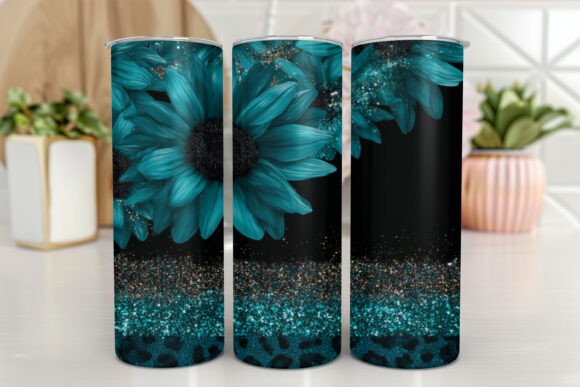
Sunflowers Tumbler Designs, Glitter: A Designer's Review
As a designer who spends more time staring at stitch maps than most people spend watching television, I approach every new digital embroidery file with a mix of excitement and skepticism. We have all been there: you download a stunning graphic, load it into your software, and realize the density is a nightmare or the details are too fine for anything but a showpiece. Today, I am taking a close look at the Sunflowers Tumbler Designs, Glitter. While this asset is technically categorized under Tumbler Wraps and Graphics, my job is to translate that visual potential into the tangible reality of thread and fabric.
First Impressions: Mood and Visual Personality
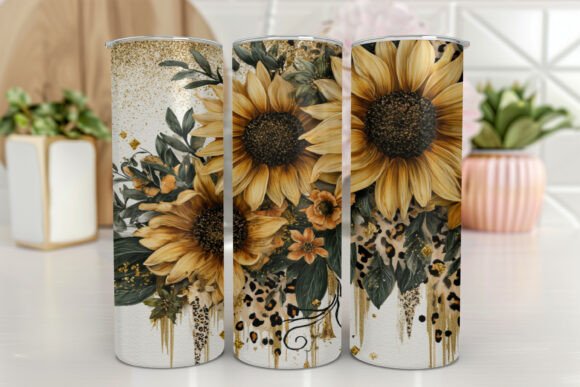
The moment I opened the archive and previewed the high-resolution image, the mood was immediate. There is a warmth here that feels distinctly summery yet timeless. The "glitter" effect in the source graphic suggests a texture that translates beautifully into specific stitching techniques. In the world of machine embroidery design, capturing the essence of glitter without actually using glitter thread (which can be notoriously difficult to work with) requires a clever play of light and shadow. This design seems to rely on a vibrant interplay of yellows and golds, creating a focal point that demands attention.
The layout, sized specifically for a 20oz straight skinny tumbler at 9.3″ x 8.2″, offers a generous canvas. For an embroiderer, this large scale is a double-edged sword. It allows for incredible detail in the petals and center of the sunflower, but it also means you are committing a significant amount of hoop time and thread to a single project. The visual personality is bold and cheerful, making it an ideal candidate for products meant to evoke happiness, such as holiday embroidery gifts for summer birthdays or back-to-school items.
Translating Graphics to Stitch: A Real-World Scenario
To truly evaluate this design, I imagined a specific client request. Picture a local boutique owner who wants to launch a line of heavy-canvas tote bag designs for a farmers' market. She needs something that pops against natural cotton but doesn't look cheap. This is where Sunflowers Tumbler Designs, Glitter enters the conversation.
If I were to adapt this graphic for a tote bag, I would likely treat it as a large-scale applique design or a dense fill project. The curvature intended for the tumbler wrap would need to be flattened or slightly adjusted depending on how the bag hangs. However, the core strength of this design lies in its ability to serve as a statement piece. On a sweatshirt embroidery project, perhaps on the back of a oversized crewneck, this sunflower could act as the centerpiece of a custom apparel line. The "glitter" aspect of the original graphic inspires me to use a combination of satin stitch for the outlines and a varied fill stitch for the petals to mimic that sparkling texture.
For a personalized gift, imagine this stitched onto a kitchen towel or an apron. The durability of the design would be key here. Since the original files are high resolution (300 DPI), the lines should be crisp enough to guide precise stitching, provided your digitizer has optimized the pathing correctly. If you are buying this as a graphic to digitize yourself, the clarity of the source image is a massive advantage, allowing you to define exact stitch angles that follow the flow of the flower.
Practical Considerations for Fabric and Technique
Before you commit to stitching this on a client's expensive garment, we need to talk about the limitations. A design of this magnitude (over 9 inches tall) is not suitable for small hoops. You will need a large hoop capability, likely a jumbo hoop, to execute this in one go. If your machine only supports standard hoops, you will be looking at a complex multi-hoop alignment, which introduces the risk of registration errors.
Fabric choice is equally critical. While this design would look magnificent on a sturdy denim jacket or a canvas tote, it might struggle on thin, stretchy fabrics like a lightweight tri-blend t-shirt. The stitch density required to capture the "glitter" look and the solid nature of a sunflower center can cause puckering if the stabilizer isn't up to the task. I strongly recommend using a cut-away stabilizer for knit fabrics to ensure the finished product maintains its shape after washing.
Textured fabrics present another challenge. If you are attempting this on a waffle knit or a heavily textured fleece, the fine details of the sunflower petals might get lost. In those cases, simplifying the design or increasing the scale of the stitches might be necessary. Furthermore, dark fabrics require careful selection of thread colors. To make the yellow pop against navy or black, you may need to add an underlay or even a white backing layer to prevent the fabric color from dulling the vibrancy of the sunflower.
Where to Use Caution
- Curved Surfaces: While designed for a tumbler, applying this logic to a cap requires distortion correction. The front panel of a cap is curved; a flat 9-inch design will look warped if not pre-distorted in your software.
- Small Details: Inspect the tiny gaps between petals. If these are too narrow, they may fill in with thread during stitching, losing the definition seen in the graphic.
- Washability: Large, dense designs can become stiff. For items like baby clothes or frequently washed kitchen towels, consider reducing the density or using softer threads to maintain comfort.
Business Value and Brand Consistency
For Etsy sellers and craft business owners, the visual appeal of a product directly impacts buyer engagement. A well-executed sunflower design signals quality and attention to detail. It adds perceived value to a simple tote bag or pillow cover, allowing you to command a higher price point. The consistency of the design—assuming you digitize it well across different products—helps build brand recognition. If customers see that specific sunflower style on your embroidered patch collection and your apparel line, it creates a cohesive brand identity.
However, remember that this listing is for digital files only. You are purchasing the graphic asset, not a pre-digitized stitch file unless specified otherwise by the seller. This distinction is vital for commercial embroidery projects. You must confirm the licensing terms before selling finished items. Can you sell the physical embroidered goods? Can you resell the digitized file? These questions must be answered before you list your first item.
Final Verdict and Designer Notes
The Sunflowers Tumbler Designs, Glitter is a potent visual asset with high potential for transformation into stunning textile art. Its strength lies in its bold size and cheerful theme, making it perfect for statement pieces in home decor and fashion. However, it demands respect in execution. It is not a "load and go" solution for beginners without some technical understanding of how to adapt a large graphic for fabric.
My advice for anyone looking to use this in their next embroidery project:
- Test First: Always stitch a sample on scrap fabric similar to your final material. Check for puckering and thread breaks.
- Check Contrast: View your mockup in black and white to ensure the tonal values hold up without relying solely on color.
- Verify Specs: Since the product details mention a .zip archive with high-res images, confirm if stitch files (.pes, .dst, etc.) are included or if you need to digitize it yourself.
- Stabilize Heavily: For a design of this scale, err on the side of too much stabilizer rather than too little.
In the hands of a skilled maker, this design can elevate a small shop product from ordinary to extraordinary. It bridges the gap between digital aesthetics and tactile craftsmanship, offering a fresh take on a classic floral motif. Just remember, the magic happens not in the download, but in the hoop.